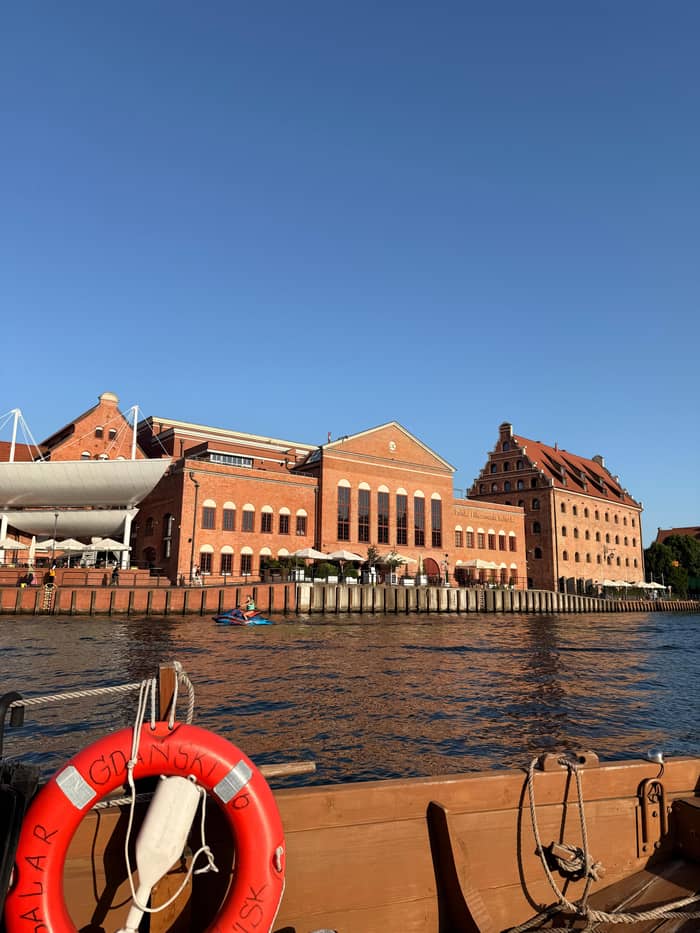
Wooden boat
Wooden galar
Shipyard start, inner quay
- Length70 minutes
- GuidePolish, English
- AccessWheelchair accessible
Explore the stops
Galar cruise through the shipyard and the Motlawa
★ 4.8 · 3,498 guest ratings
Map of 21 stops
Select a route, then tap a marker or stop to see its note and open Google Maps.
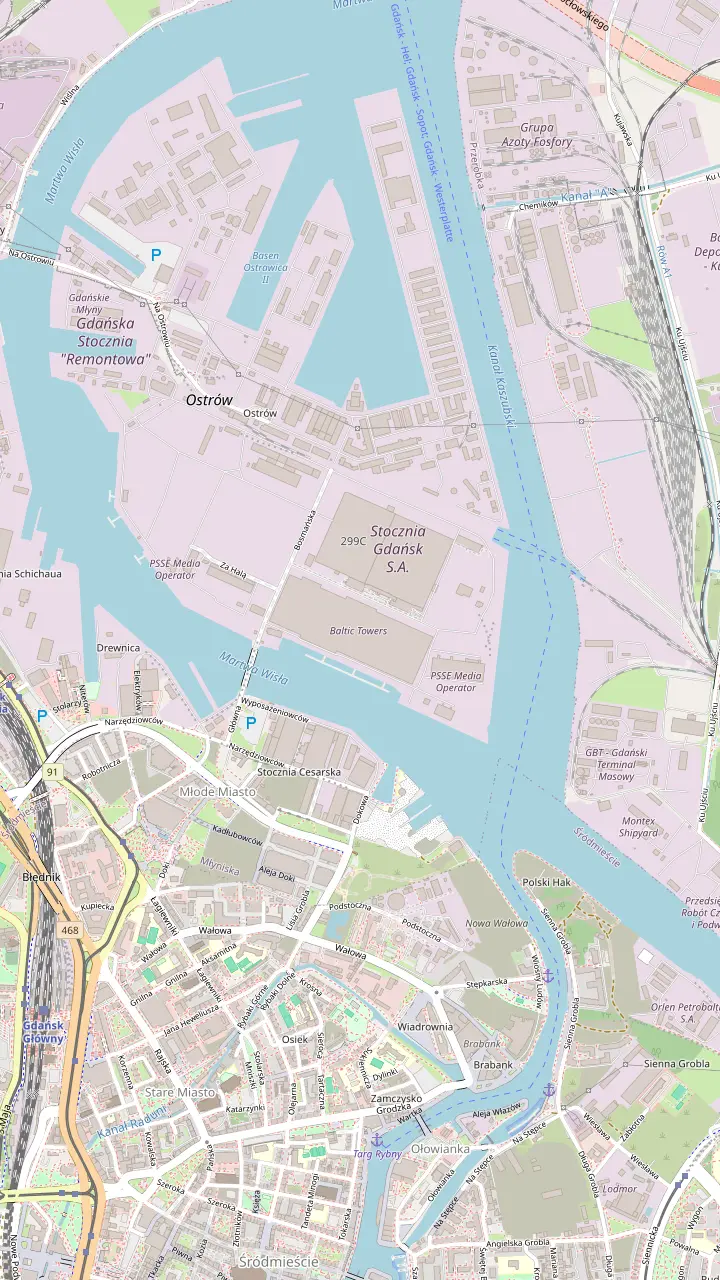
The galar's shipyard start: a marina made in an old shipyard dock.
Google MapsOnce a torpedo store of the Imperial Shipyard; the August 1980 agreement was signed in it.
Google MapsThe shipyard gate with the three 42-metre crosses of the 1970 monument beside it.
Google MapsThe headland named after the Polish raftsmen who brought grain; the harbour waters start here.
Google MapsThe island turned over to building submarines and torpedo boats in 1916, still a working yard.
Google Maps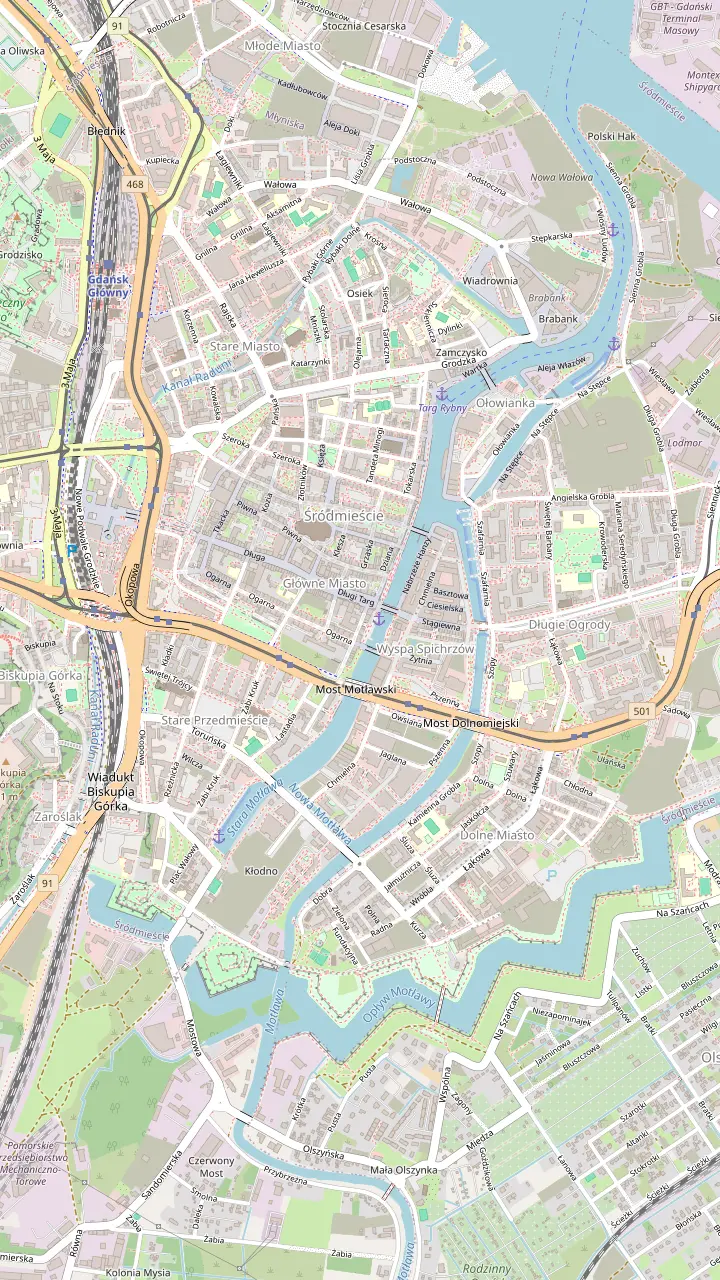
Raised in 1568-1571 as lodgings for visiting monarchs; Długa and Długi Targ run from here to the Golden Gate.
Google MapsThe riverside promenade with its line of Gothic water gates and the berths of the tourist boats.
Google MapsThe Gothic gate at the river end of Mariacka Street, the lane that runs up to St Mary's Church.
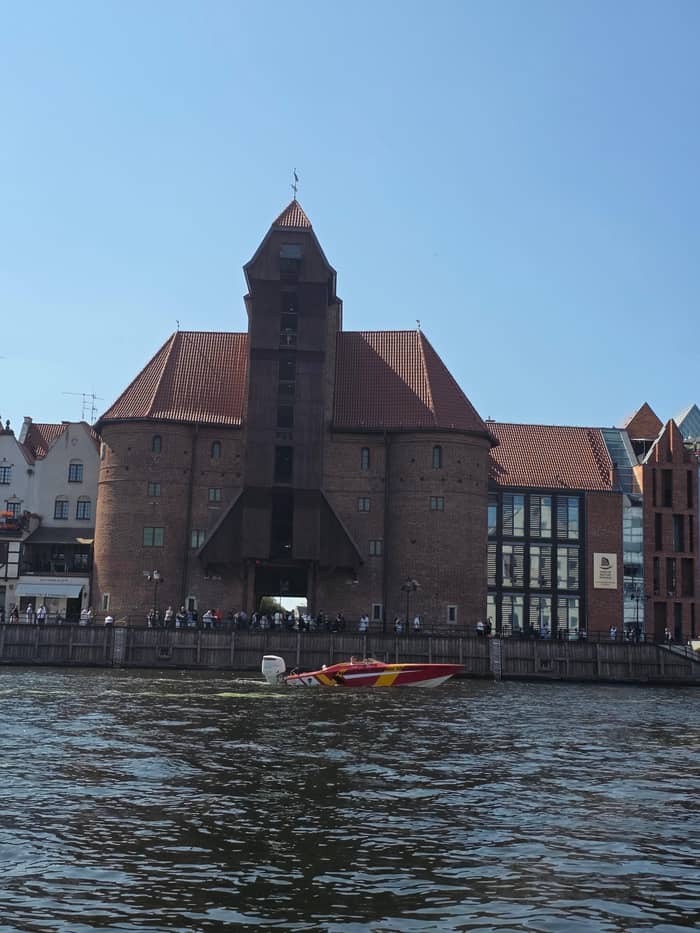
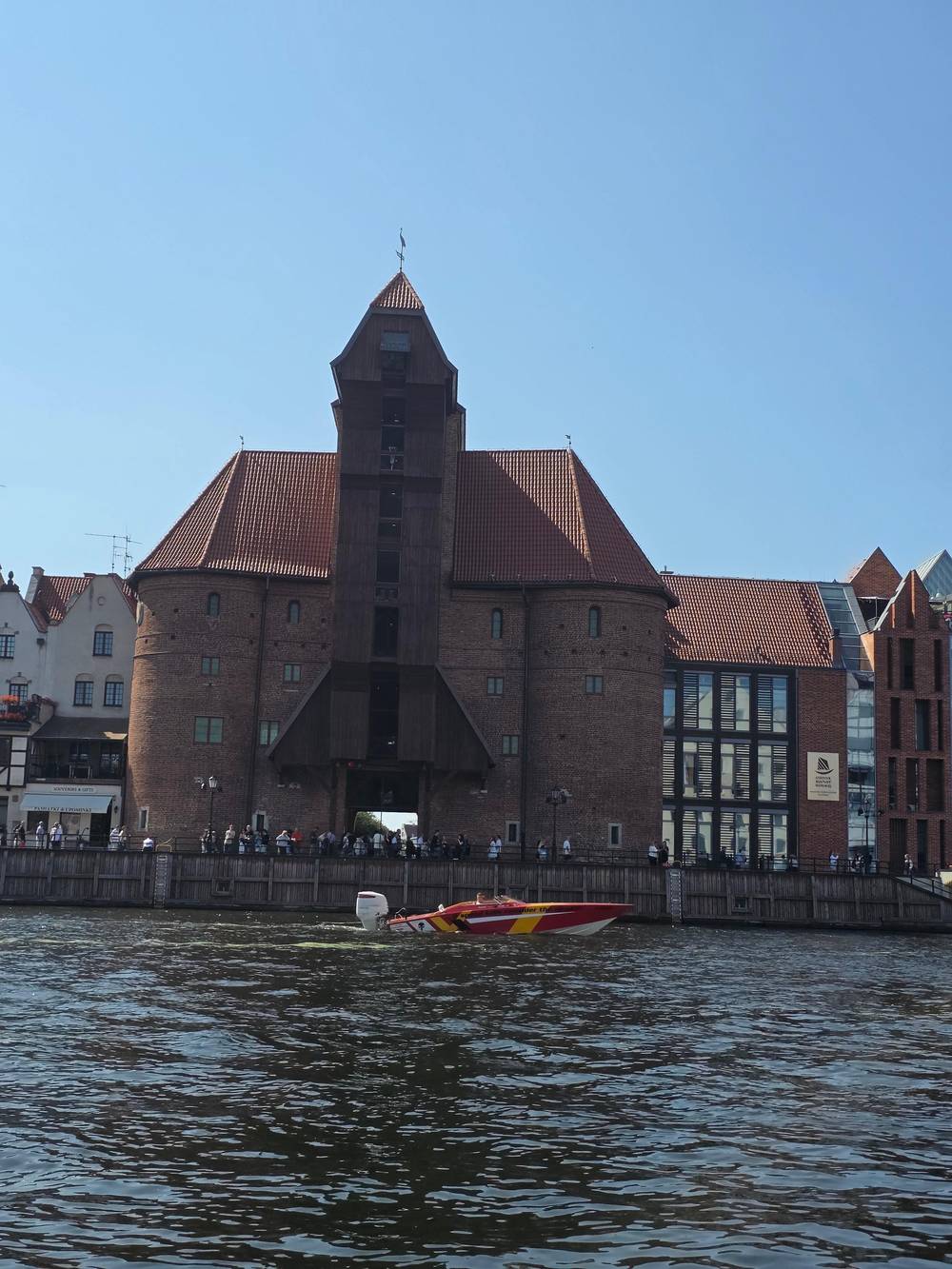
Google MapsBuilt in 1444 as gate and port crane; its treadwheels once lifted up to 4 tonnes.
Google MapsThe Nowa Motława and the Stara Motława split around the island and meet again by the Crane.
Google MapsThe museum's main exhibition fills three historic granaries; the permanent show is free on Wednesdays.
Google MapsFrom 1949 to 1981 this steamship made 1479 voyages with coal and ore, now a museum.
Google MapsThe philharmonic hall on Ołowianka, facing the moored Sołdek across the water.
Google MapsA Ferris wheel 50 metres high on Ołowianka; a ride lasts about 15 minutes.
Google MapsThe Teutonic mill on the Radunia Canal had 18 water wheels; the Amber Museum is inside now.
Google MapsThe early 17th-century lock where the Motława enters the centre; a mark records the flood of April 1829 on its wall.
Google Maps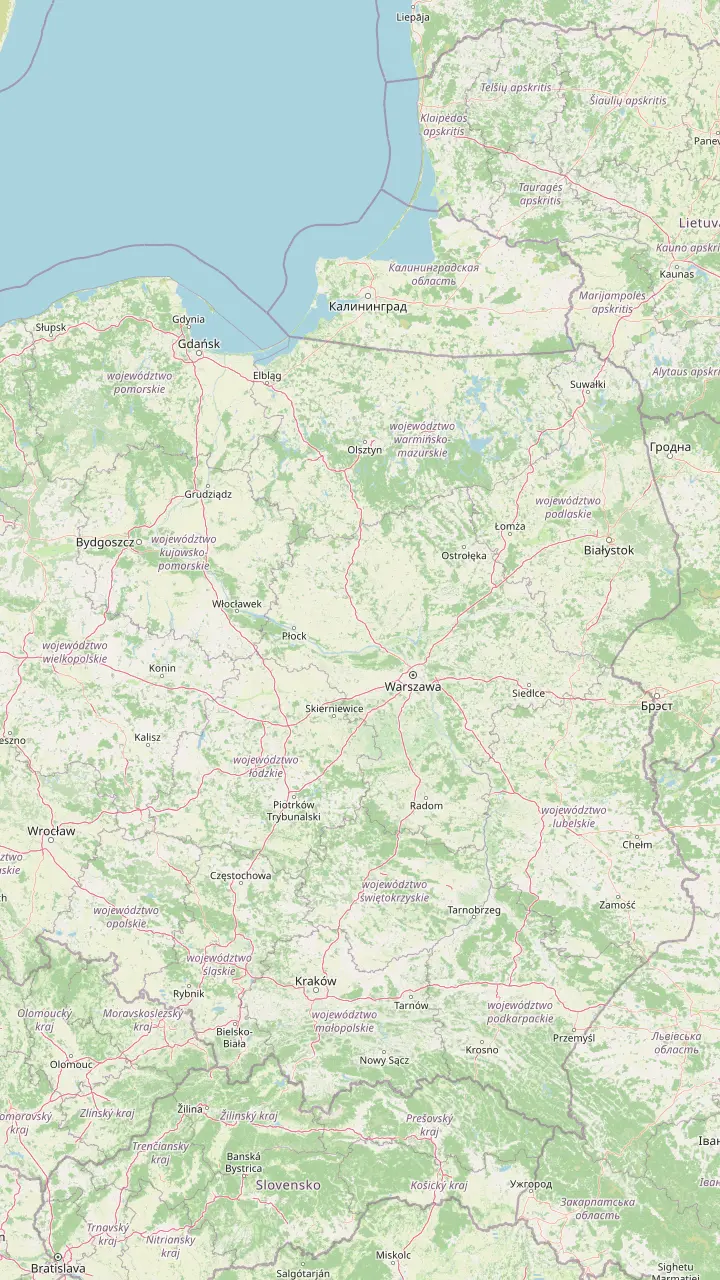
The headland named after the Polish raftsmen who brought grain; the harbour waters start here.
Google MapsA branch of the National Maritime Museum with boats, tools and models of Vistula trade, free on Saturdays.
Google MapsA river town on the rafters' road from Ulanów down to Gdańsk.
Google MapsOne of the Vistula grain ports on the way to Gdańsk.
Google MapsIts riverside grain store of Mikołaj Przybyła dates from the 16th century.
Google MapsThe capital of Polish rafting, where the Tanew meets the San; 724 km to Gdańsk by raft.
Google MapsMap © OpenStreetMap contributors
A Gdansk ship tour shows the side of the city you rarely see from the street: the yards where ships and submarines were built, the cranes, the docks and a port still growing.
Editorial team, gdanskboattour.click · Updated November 9, 2026 · Read in 8 min
Overview
A Gdansk ship tour makes the most sense once you know how old the port is. The Port of Gdansk Authority traces its first written mention to The Life of Saint Adalbert in 999.1 The city joined the Hanseatic League in 1361, according to the same port timeline, and King Casimir Jagiellon signed his great privilege for the city on 15 May 1457.5,6 The quays you sail past grew out of those centuries of trade.
The port authority notes that more than three million tourists visit Gdansk each year and that every third visitor comes from abroad.7 That is a lot of people on a compact waterfront, which is one more reason to get onto the water. The postcard view is the Long Embankment. The working side, with its shipyard halls, dry docks, cranes and the quays of the inner port, is hidden from the street behind fences and gates, and that is exactly the ground a boat covers in an hour.
The site's own galar cruise, a guided boat tour in Gdansk with live commentary, is one way in. Its route includes the port cranes, specialist vessels and the inner quay of the Port of Gdansk, and the shipyard areas where German submarines were built in the Second World War. A yacht cruise goes further into the port, and a small harbour boat follows the shipyard from the Old Town. Each is covered at the end of this page, with its own strengths.
The yards
| Yard | Began | Known for |
|---|---|---|
| First Gdansk yard | 1830s20 | Sailing ships, river steamers |
| Imperial Shipyard | Named 18712 | Navy ships, U-boats |
| Schichau yard | 1890s21 | Founded by an Elblag shipbuilder |
| Gdansk Shipyard | 19478 | Over 1000 vessels22 |
Dates as the National Institute of Cultural Heritage records them; the Imperial Shipyard's submarine work is from the Museum of Polish History.20,2,21,8,23
Before steam and steel, the port ran on muscle and timber. The National Maritime Museum's exhibition in the Crane sets the scene in the city's golden age of grain, when ship captains paid customs duties and other dues in a toll chamber on arrival.11 Its animated film is built around the real merchant and shipowner Hans Kross, whose ships made up five per cent of the city's fleet in the years 1695 to 1697, a reminder that this was a port of private fortunes.12
The Crane was the heavy plant of that port. Its treadwheels, each more than 6 metres across, could lift loads of up to 4 tonnes.13 Seen from the deck of a small boat it still dominates the Old Town waterfront, and it explains why the quays were laid out as they were: goods came up from the hulls, across the embankment and into the warehouses behind it. Keep that picture in mind when you sail on towards the steel cranes downstream.
Today the cranes are steel and they are everywhere. The Polish Tourism Organisation counts about 120 cranes in the city, some turning in place and others running on tracks.14 It calls them a characteristic part of the Gdansk skyline, tied to the shipyard. Count them from the water and you will see both eras of the same job: a wooden hoist from the age of grain and the steel giants of the shipbuilding century.
Shipbuilding is the younger of the two trades on this water, and its story is told in brick along the Martwa Wisla. The National Institute of Cultural Heritage records that Gdansk's first shipyard opened in the 1830s where the Radunia Canal meets the river, a small private yard building sailing ships and river steamers.20 By the Martwa Wisla the Prussian authorities then set up a navy yard, named the Imperial Shipyard in 1871.2
In the 1890s Ferdinand Schichau, who already owned a shipyard in Elblag, built a second large yard nearby.21 Between them they filled the land along the Martwa Wisla up to the Old Town bastions with halls, workshops, docks, ramps and cranes, some of which still stand.26 The Imperial Shipyard is the oldest part of the whole complex, and the regional conservator described it as covering about 10 hectares.27,28 Its brick halls are the first old buildings you meet beside the galar's berth.
The wider former shipyard covers more than 70 hectares and developed from the 19th century into the early 1990s.29 It is now planned as a new district, Mlode Miasto, the Young City, with homes, offices and shops.30 From a boat you see both layers at once: listed brick buildings from the Imperial era and new blocks rising behind them. The galar's shipyard start sits right in this landscape.
Pick your harbour
Each boat leans towards a different part of the harbour.
If I want the history of the yards
The wooden galar
It starts at the former shipyard and passes the submarine yards.
If I want dry docks and working ships
The port yacht
It shows cranes, quays, dry docks and ships under repair.
If I want a German-speaking guide
The harbour boat
Its live guide speaks German and Polish.
If I want to reach the open bay
The 110-minute yacht option
It reaches the port mouth and may enter the bay.
If I want to go aboard a ship
The Soldek on Olowianka
A postwar steam coal and ore carrier, now a museum.24
Boats into the harbour
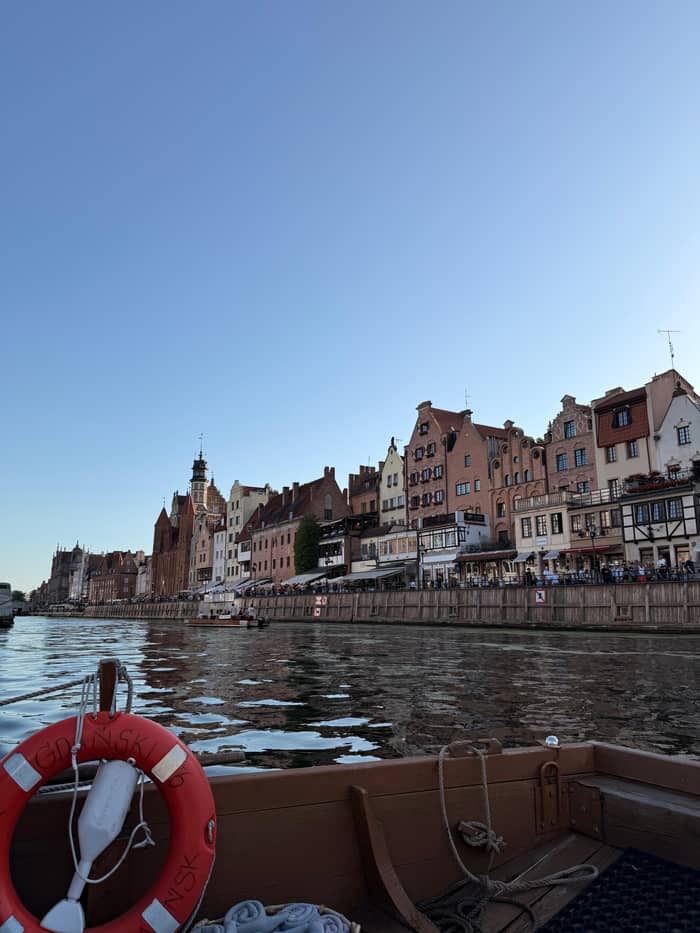
Wooden boat
Shipyard start, inner quay
Two-deck yacht
Cranes, dry docks, port mouth
Small group
Old Town and shipyard
Part of this history is grim, and it is told plainly here. According to a report carried by the Museum of Polish History, the first U-boats were built at the Imperial Shipyard, and by the end of the First World War the yard had completed 46 of them.23 In 1916 the whole of Ostrow island was given over to building submarines and torpedo boats.54 The island still holds a working shipyard, a private company today.
Submarine production at the Gdansk yard resumed in 1939.62 By the end of the Second World War the Gdansk yard had produced 42 U-boats of type VII C, the main fighting force of the German submarine arm.3 When Soviet troops took the yard in March 1945, 18 unfinished U-boats were still on site.63 Only on 26 July 1945 did the Soviets hand the devastated shipyard to Polish managers, having taken most of those boats and many of its machines away.64
Traces remain. A section of U-boat hull about 30 metres long was used after the war to build a shelter on the shipyard grounds and was later moved to Wisloujscie Fortress.65 The galar listing names the areas where German submarines were produced among the places it passes. Seen from the water these are quiet quays, and that silence is part of the point: the guide can tell you what was built there and for which war.
Price the harbour
Pick a harbour boat and enter your group size.
Review 3 options
Pick a harbour boat and enter your group size.
≈
View≈
View≈
ViewFigures are GetYourGuide from-prices, translated at the ECB reference rate. The booking step shows what you pay exactly.
Port and yards
999
The port is mentioned in The Life of Saint Adalbert.1
1361
Gdansk joins the Hanseatic League.5
1871
The navy yard by the Martwa Wisla gets its name.2
1947
A state yard is formed from the Imperial and Schichau yards.8
1974
The port opens its outer harbour.9
2007
Today's Baltic Hub starts work.10
Work restarted quickly in the ruined city. Shipbuilding began again in 1945, and in 1947 a state-owned Gdansk Shipyard was formed from the former Imperial and Schichau yards.8 It took the name of Vladimir Ilich Lenin in 1967.66 Over the decades it built more than 1000 vessels of many types, according to the national heritage register, many of them to plans from its own design office.22
One vessel from that era is moored downtown. The museum ship Soldek, on Olowianka, was the prototype of Poland's postwar seagoing fleet, and no other steam coal and ore carrier survives anywhere.24 Its working life ran from 1949 to 1981, with 1479 voyages in all.40 If your Gdansk tourist boat passes Olowianka, look for it at the quay; climbing aboard afterwards completes the story the shipyard begins.
The yard also made political history. On 14 August 1980 a strike began here in defence of Anna Walentynowicz, who had been fired, and the agreement that ended it was signed in the BHP Hall, once a torpedo store of the Imperial Shipyard.67,49,50 The monument to the shipyard workers killed in 1970, three steel crosses each 42 metres high, stands at the shipyard gate.51 From the river you see the yard; the gate and the hall are a short walk inland.
Video
In Your Pocket City Guides on YouTube · Nothing is fetched until you hit play.
The first is the Inner Port, comprising the Dead Vistula and the port channel. The second is the Outer Port, located on the waters of Gdańsk Bay
Harbour day
The Port of Gdansk is split into the Inner Port along the Martwa Wisla and the port channel, and the Outer Port on the open bay.25 The deepwater terminals of the outer port take ships up to 400 metres long with a draught of up to 15 metres.68 City boats stay in the inner port, so the giants are seen at a distance if at all, but the inner quays still handle real cargo, and the ships tied up along them are working vessels rather than props.
The growth is recent, and the port's own timeline marks each step of it. The Northern Port opened in 1974 and the deepwater container terminal, now Baltic Hub, in 2007.9,10 By 2023 the port was handling more than 80 million tonnes a year.69 In the first nine months of 2026 it moved 65.2 million tonnes, with liquid fuels the largest group at about 45 per cent.4,70 Containerised cargo reached 21.1 million tonnes in the same months.71
Grain, the cargo the city was built on, still passes through: 2.1 million tonnes in the first three quarters of 2026, up 33 per cent.19 Passenger traffic is part of the picture too. Between 2016 and 2025, 476 cruise ships called at the port with more than 200,000 passengers.72 The cargo chart on this page shows how the load splits, and why the harbour still feels like a working place rather than a museum.
The galar is the gentlest introduction: 70 minutes, commentary from a live guide in both Polish and English, and a route that runs from the shipyard through the canals to the Old Town and past the inner quay. It starts from €19, and the price includes the guide's commentary for the whole ride. Because it is small and low, it also slips into corners the big boats cannot use, which makes it a good Gdansk ship tour for history rather than scale.
For more of the working port, a yacht cruise of 50 to 110 minutes leaves from the quay on Wartka Street, from €17. Its listing names port cranes, quays, dry docks and ships under repair or loading, and on the 110-minute option the yacht reaches the harbour mouth and may enter the bay in good weather. It has two decks, open and covered, plus a toilet, and serves a non-alcoholic welcome drink.
A third choice is a small harbour boat of up to 7 guests along the Old Town and the shipyard, an hour long, from €17. Its guide speaks German and Polish, and it sails only on rain-free days, with a full refund otherwise. The galleon-style ships on the Motlawa follow a longer harbour route out to Westerplatte via the shipyards and the docks.73 Pick by how much of the port you want and in which language.
FAQ
The galar starts at the former shipyard and the harbour boat follows it from the Old Town.
Its first written mention dates to 999, in The Life of Saint Adalbert.1
The Outer Port lies on the open bay.25
It has two decks and a toilet on board.
Cancelled trips are refunded in full.
Sources
Read next
Planning a boat on the Motlawa? Ask a real person here.