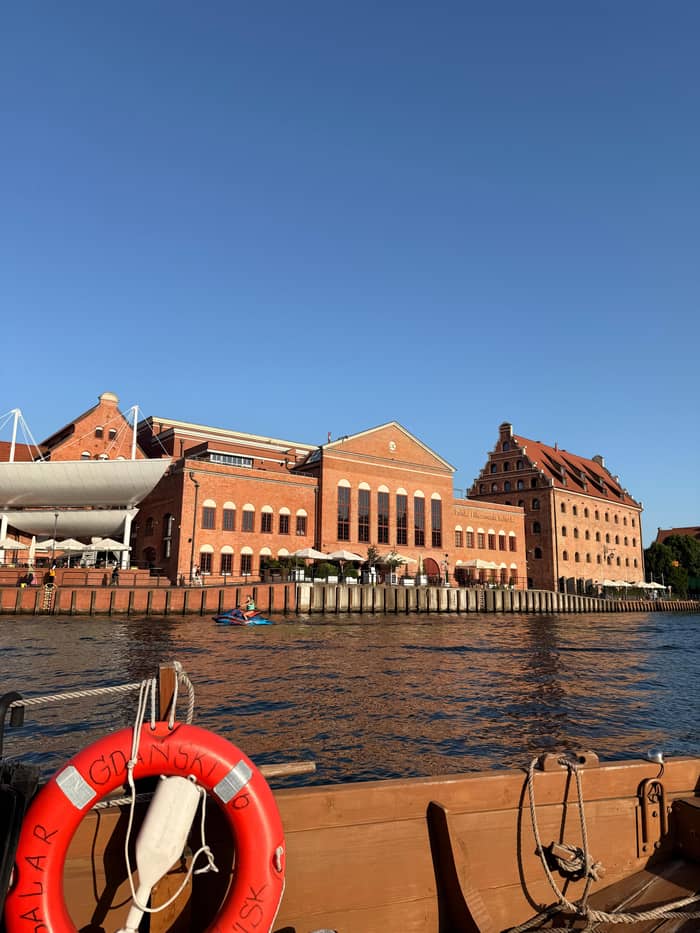
Cold season
Winter kayak tour
Shipyard start, Motlawa paddle
- Length2.5 to 3 hours
- GroupUp to 10
- WeatherRain or shine
Group price calculator
Review 3 options
Choose a trip and say how many are coming.
≈
View≈
View≈
ViewFigures are GetYourGuide from-prices, translated at the ECB reference rate. The booking step shows what you pay exactly.
What to do in Gdansk in February is a fair question: the river is cold, the days are short, yet boats still sail. Here is the year on the Motlawa, month by month, with the weather to match.
Editorial team, gdanskboattour.click · Updated November 9, 2026 · Read in 8 min
Overview
Anyone asking what to do in Gdansk in February should start with the numbers. At the Elblag-Milejewo station, 55 km from the city, February averages a daily high of 2.4 °C and a low of -3.6 °C, and about 9.7 hrs of daylight at mid-month.1 It is the driest month on that record, with 34 mm of precipitation.1 Cold and short, then, but rarely a washout, and the Old Town has far more room to breathe than in summer.
Boats do not vanish in winter. A guided winter kayak trip, lasting 2.5 to 3 hours, sets off from the shipyard whatever the sky does; only dangerous weather stops it, and then you are offered another date or your money back. The yacht that tours the Motlawa and the port lists a non-alcoholic mulled wine as its welcome drink outside the spring and summer months, which tells you it sails then too. The small electric eco boats keep pillows and blankets on board.
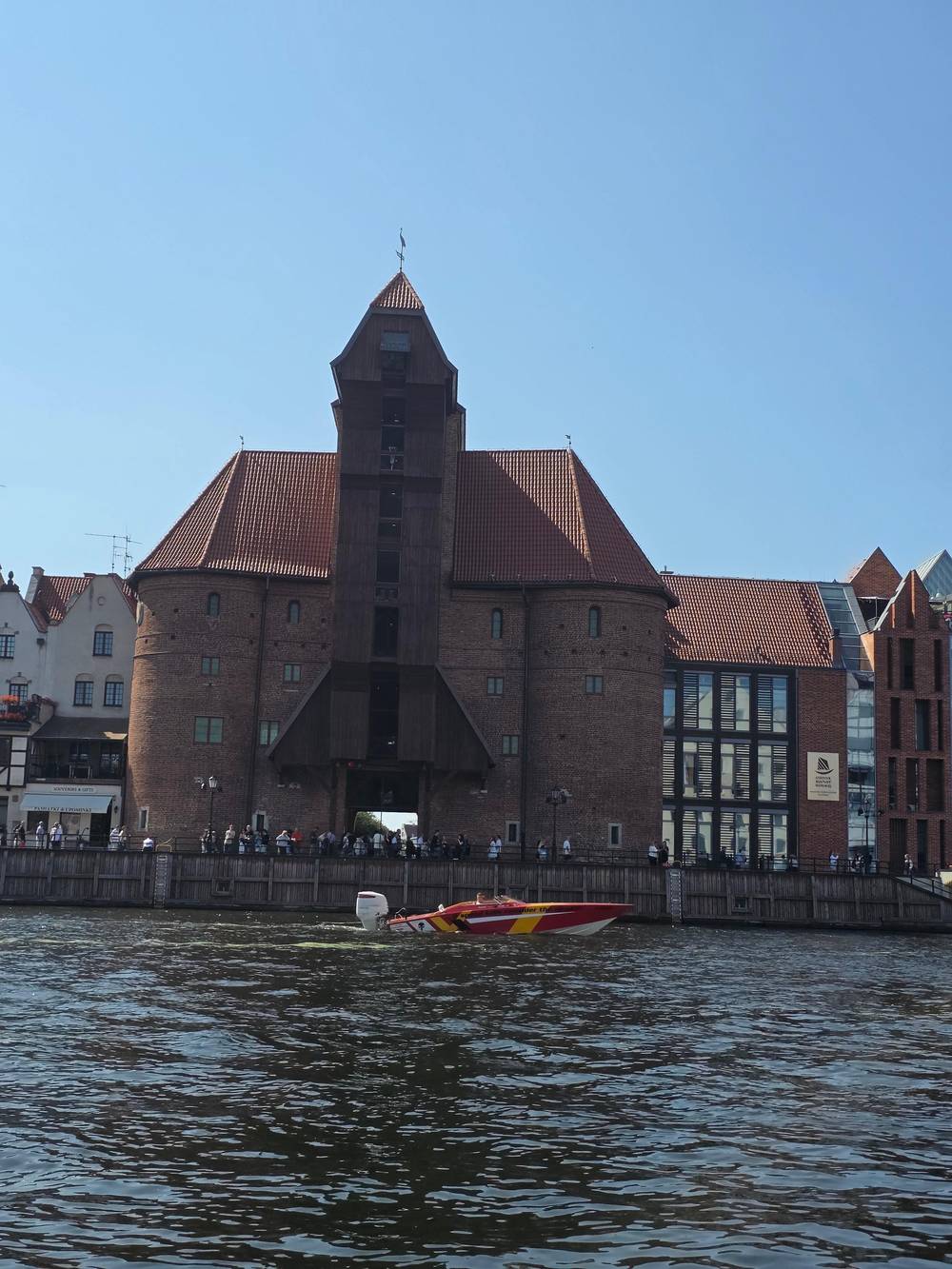
Plan the rest of a February day indoors. The Gdansk tourist office keeps a list of places for days when it is cold, raining or windy.5 On Wednesdays the permanent exhibition of the National Maritime Museum in its granaries is free.6 Across the river, the Crane's exhibition tells the story of the grain port.7 A short cruise in the brief midday light, then a museum, then a warm restaurant: that is a sound winter plan for Gdansk.
Season by season
| Season | On the water | Ashore |
|---|---|---|
| Winter | Winter kayak tour | Christmas market10 |
| Spring | Prosecco on the port yacht | Long evenings return |
| Summer | Sailing ships at Baltic Sail12 | St Dominic's Fair2 |
| Autumn | Sea routes wind down9 | NARRATIONS art festival13 |
Events as the Gdansk tourist office lists them; boat details from the operators' listings and Zegluga Gdanska.10,12,2,13,9
March is still cold, and the first cruises of the year are for people who dress for it. The Elblag-Milejewo station puts the average March low at -1.3 °C and the high at 6.4 °C.1 By April the Leba station, 84 km west on the coast, gives an average high of 11.3 °C, and the sun is up for about 14 hrs at mid-month.1 Those longer evenings change the river: suddenly a late-afternoon cruise ends in daylight rather than dusk.
The boats mark the change in small ways. The port yacht switches its welcome drink from mulled wine to a non-alcoholic prosecco from March or April. The Polish Tourism Organisation names May and June among the best months to visit the country, warm enough and with fewer tourists than high summer.3 In May the Leba record gives an average high of 15.7 °C and about 16 hrs of daylight.1
Spring has an old meaning on this river too. A 16th-century account cited by the Polish education ministry describes noble landowners sending their grain downriver each spring to be sold in Gdansk.11 The meltwater that once carried the grain boats now carries tourist boats, and a spring cruise on the galar, a replica of those river craft, is a neat way to see the city at the season it was built for. Bring layers: the wind off the water is colder than the air on land.
Weather by month
Mid-month hours with no sun, and days when precipitation reaches 2.5 mm or above. Source: NOAA, station Elblag-Milejewo, 55 km away (rainfall all year; temperatures in February, March and December) and Leba, 84 km away (temperatures in the remaining months), 1991 to 2020.1
Summer is the busy season, and the river shows it from the first morning boat. June has the longest days: on the Leba record the sun is up about 17.2 hrs at mid-month.1 July averages a high of 21.5 °C at Leba, while the Elblag-Milejewo rain gauge records 100 mm, the wettest month of the year there.1 August is almost as warm, with a 21.7 °C average high at Leba.1 Expect showers between long, bright evenings.
The sea keeps things mild. The Polish Tourism Organisation notes that the Baltic can make summer temperatures lower than elsewhere in Poland.14 That suits a boat trip: a breeze on the water, rarely real heat. It also means a jacket for the evening cruise, even in July, because the temperature falls fast when the sun sinks behind the gables of the Long Embankment. A seat on the shaded side of the boat is worth asking for at noon.
Summer is also festival season on the waterfront. During Baltic Sail, sailing ships moor on the Motlawa near Targ Rybny and open their decks to visitors.12 It is a rare chance to compare a modern tourist boat with a tall ship moored a few metres away. In the second half of August, the Mozartiana festival turns Oliwa Park into an open-air concert stage.8 Book boat trips in Gdansk a few days ahead at this time of year; a boat like the galar has only 12 seats.
Pick your season
Match the month to the kind of river day you want.
If I want long, light evenings
June
About 17.2 hrs of daylight at mid-month.1
If I want the city at its liveliest
Late July or early August
St Dominic's Fair runs for three weeks.2
If I want calm and fewer crowds
September or October
The national tourism board recommends them.3
If I want winter on the water
A winter kayak tour
It runs rain or shine from the shipyard.
If I want festive lights
Late November
The Christmas market opens in the second half of the month.10
Boats for the season
Cold season
Shipyard start, Motlawa paddle
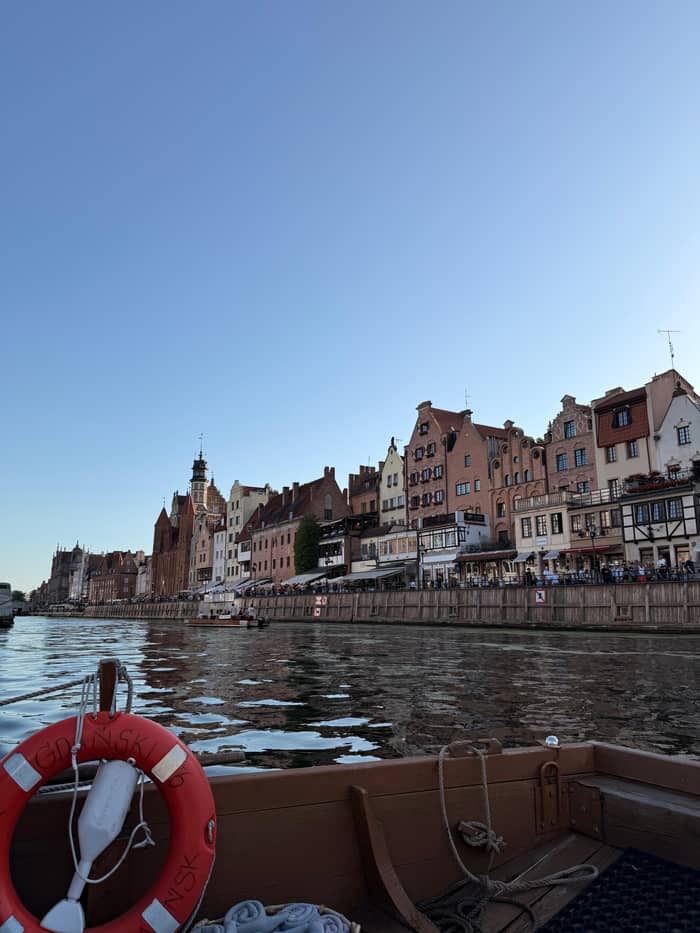
Two decks
Covered deck, warm drink
Daytime
Shipyard, canals, Old Town
The biggest date in the Gdansk calendar is St Dominic's Fair, and it shapes the whole of high summer. The tourist office says it normally opens in late July or early August and runs for three weeks.2 Its roots go back to 1260, when a papal grant let the city's Dominican friars offer an indulgence on the feast of their founder.15 Stalls fill the streets of the Main Town, and the waterfront is part of the show.
Old accounts tie the fair closely to the port and its trade. A 16th-century text on the ministry's education platform says that over 400 ships crowded into the harbour during the August fair.16 Today the visitors arrive by train and plane rather than under sail, and the ships in the river are small tourist boats, but sitting in a galar under the Crane during fair week still gives a hint of a crowded medieval harbour.
Practical advice for those weeks: book early, travel light and choose a morning departure. The galar has 2 boarding options, and one of them is at the former shipyard, away from the busy streets of the Main Town. Free cancellation up to 24 hours ahead lets you shift the trip when a storm is forecast. Once you are on the water, the fair's noise fades and the city looks briefly as calm as it does in spring.
Through the year
March or April
The port yacht switches to non-alcoholic prosecco.
Late July
Three weeks of the old trade fair begin.2
Second half of August
Mozartiana fills Oliwa Park.8
Mid-October
Zegluga Gdanska ends selected routes.9
Late November
The market runs into early December.10
Winter
A guided winter kayak tour runs rain or shine.
Autumn is a calmer season on the river once the summer rush is over. The Polish Tourism Organisation lists September and October among the best months for a visit, still warm and less crowded.3 The Leba record puts September's average high at 17.9 °C and October's at 12.7 °C.1,1 In mid-October the sun stays up for about 10.6 hrs, so evening cruises turn into twilight cruises.1 Pack a warm layer from late September onward.
The longer sea routes are the first to shut down at the end of the season. The white-fleet operator Zegluga Gdanska ended its season on selected routes on 12 October 2026 and kept the Gdynia to Hel line running to the end of that month.9,17 Inside the city the river boats carry on, and autumn is a good time for a boat cruise in Gdansk because the low sun lights the brick of the granaries and the Crane from the side.
There is culture to fill the shorter days, much of it within walking distance of the boats. The NARRATIONS festival of contemporary art takes over a different district of the city each autumn.13 November is the turning point: the national tourism board notes that it brings rain and lower temperatures.18 On the Leba record November averages a high of 7.2 °C, and Elblag-Milejewo logs 59 mm of precipitation that month.1
Video
MiniVentures on YouTube · Nothing is fetched until you hit play.
The proximity of the sea can make the temperatures in summer lower than elsewhere in the country
Pack for the water
From the second half of November into early December, Gdansk holds its Christmas market, one of a number across Europe in those weeks.10 It is the brightest time of the dark season, and a short river trip before or after the market makes a fine pairing. December days are the shortest, with about 7.4 hrs of daylight at mid-month, and the Elblag-Milejewo station puts the average high at 3.2 °C.1
January's average high on the Leba record is 2.5 °C, and Elblag-Milejewo measures 52 mm of precipitation.1 The national tourism board advises waterproof clothing in every season of the year.4 On an open boat that means a hat, gloves and a proper waterproof layer, not a city coat alone. Thermal socks and a flask of something hot make a short winter cruise a pleasure rather than an endurance test, and the views of a quiet, frosty Main Town are worth it.
Pick boats that suit the cold. The winter kayak tour is designed for it, with a 30-minute safety briefing at the shipyard before 105 minutes on the Motlawa, a weight limit of 110 kg and a rule that every paddler can swim. The port yacht has a closed deck as well as an open one. Whatever you book, check the cancellation terms: the galar and the port yacht both allow free cancellation up to 24 hours ahead.
Rain is the main variable all year, and it is worth checking the forecast the evening before. On the Elblag-Milejewo record, July brings 9 days with 2.5 mm or more of precipitation and February 4 such days.1,1 Some boats stop for rain and some do not. The small harbour cruise along the Old Town and the shipyard sails only on rain-free days and refunds in full otherwise. The Motlawa catamaran sails rain or shine.
Wind matters more than rain on an open boat. The river itself is sheltered, but the port yacht's longest option heads for the harbour mouth and enters the bay only if the weather allows. Inside the city the water stays calm: the regional kayak trail guide notes that the Motlawa's weak current can be paddled in both directions.19 If the forecast looks rough, book a river loop rather than a harbour run and keep the sea for a calmer day.
For boat trips in Gdansk the practical rule is simple. In summer book ahead and dress for showers; in winter book a short ride, wrap up and plan the warm part of the day indoors. The galar's free cancellation up to 24 hours ahead makes it easy to wait for a good forecast before committing. Use the climate chart here to find your travel month, and pack for the water rather than the street.
FAQ
A winter kayak tour runs rain or shine, and the Christmas market fills late November.10
The port yacht serves mulled wine outside the warm months, and a winter kayak tour runs in the cold season.
The Elblag-Milejewo station averages a high of 2.4 °C and a low of -3.6 °C.1
It usually lasts three weeks.2
The national tourism board recommends May-June and September-October.3
It runs only on rain-free days and refunds otherwise.
Zegluga Gdanska ended selected routes on 12 October 2026.9
Sources
Read next
Planning a boat on the Motlawa? Ask a real person here.