Daytime
Galar city cruise
Shipyard, canals, Old Town
- Length70 minutes
- GuidePolish, English
- Seats12
Explore the stops
Galar cruise through the shipyard and the Motlawa
★ 4.8 · 3,498 guest ratings
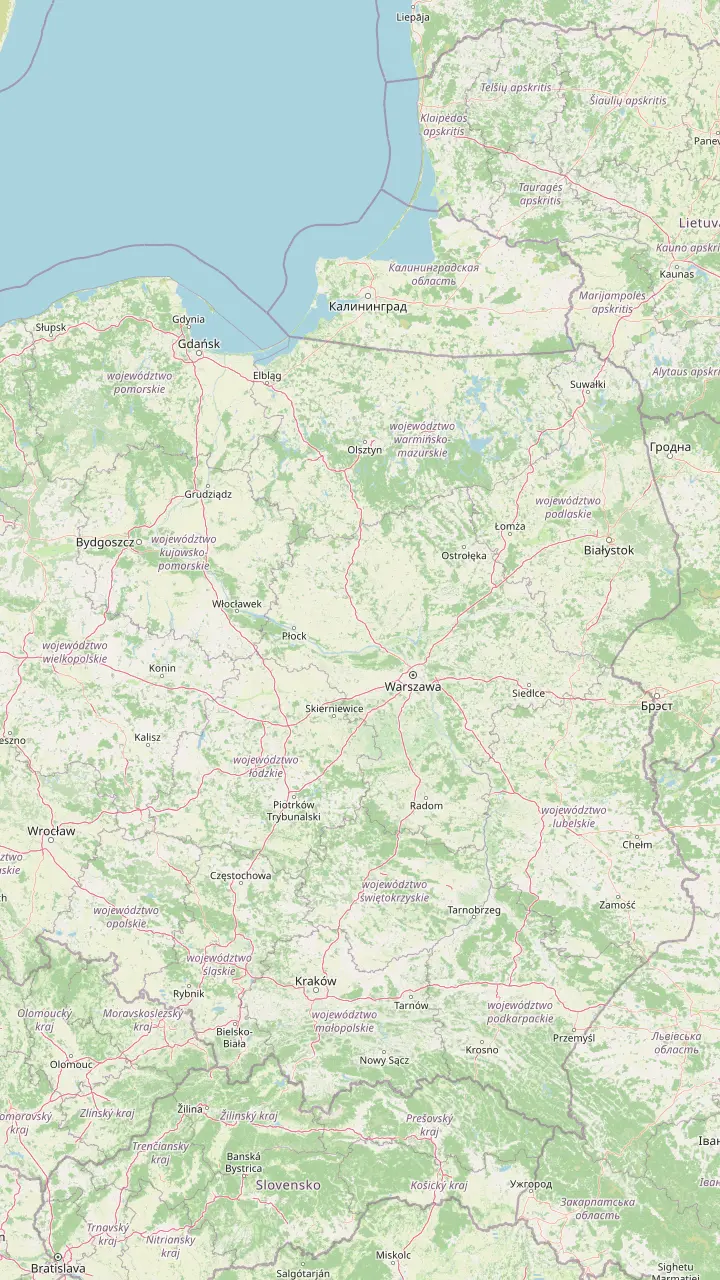
Map of 21 stops
Select a route, then tap a marker or stop to see its note and open Google Maps.
The headland named after the Polish raftsmen who brought grain; the harbour waters start here.
Google MapsA branch of the National Maritime Museum with boats, tools and models of Vistula trade, free on Saturdays.
Google MapsA river town on the rafters' road from Ulanów down to Gdańsk.
Google MapsOne of the Vistula grain ports on the way to Gdańsk.
Google MapsIts riverside grain store of Mikołaj Przybyła dates from the 16th century.
Google MapsThe capital of Polish rafting, where the Tanew meets the San; 724 km to Gdańsk by raft.
Google Maps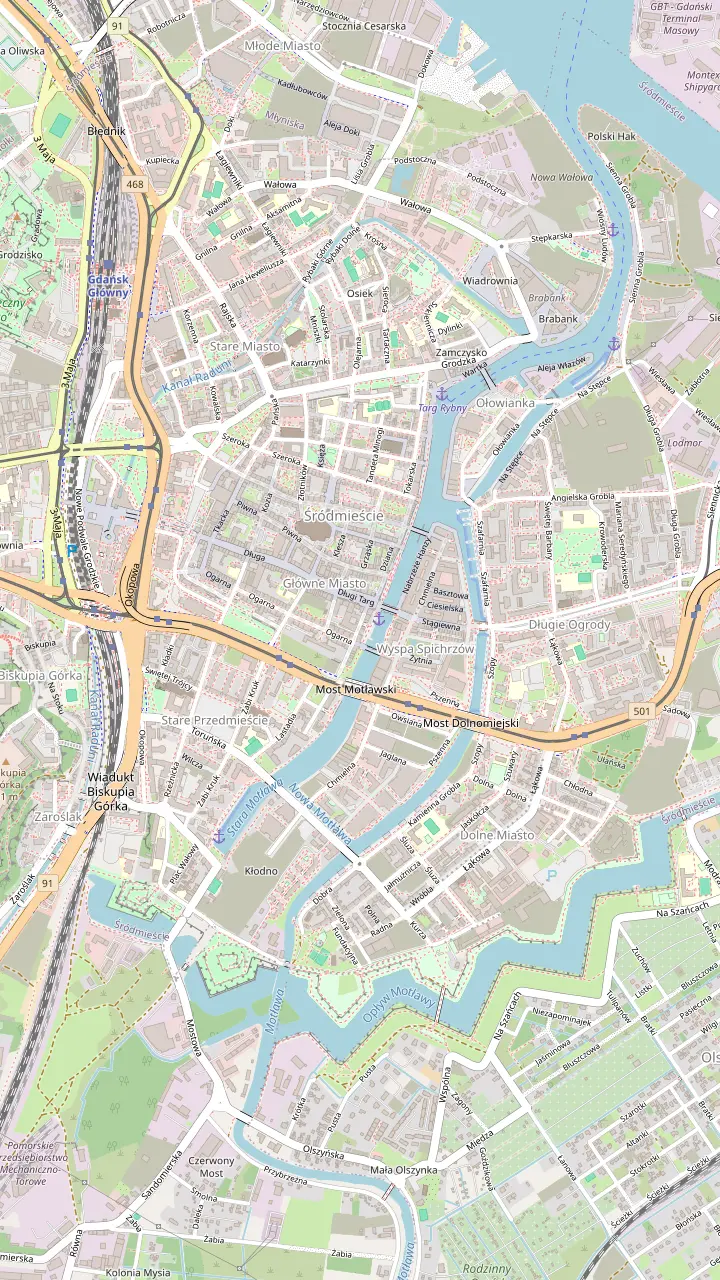
Raised in 1568-1571 as lodgings for visiting monarchs; Długa and Długi Targ run from here to the Golden Gate.
Google MapsThe riverside promenade with its line of Gothic water gates and the berths of the tourist boats.
Google MapsThe Gothic gate at the river end of Mariacka Street, the lane that runs up to St Mary's Church.
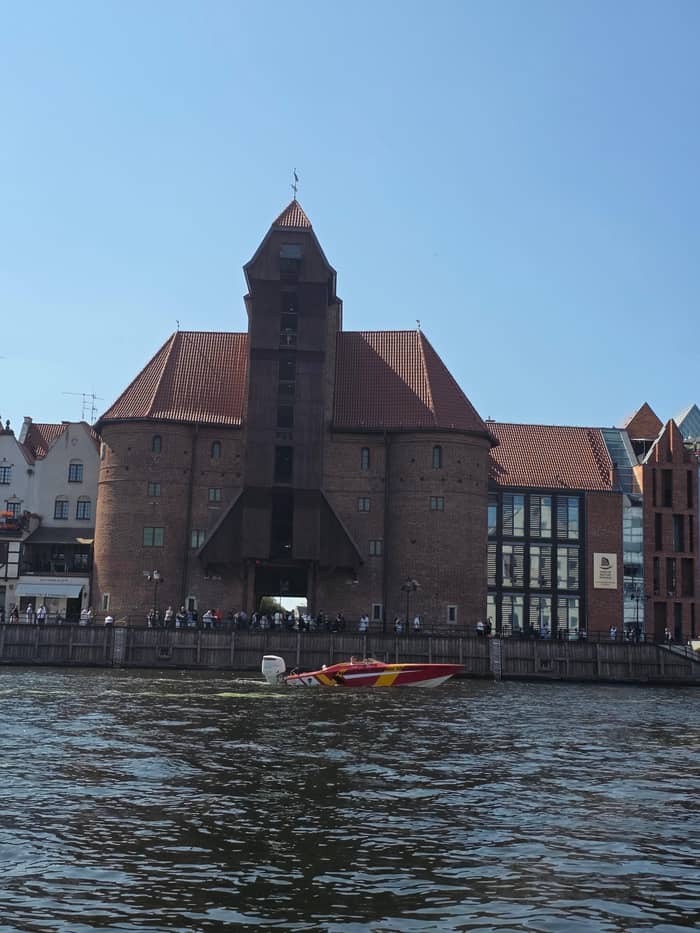
Google MapsBuilt in 1444 as gate and port crane; its treadwheels once lifted up to 4 tonnes.
Google MapsThe Nowa Motława and the Stara Motława split around the island and meet again by the Crane.
Google MapsThe museum's main exhibition fills three historic granaries; the permanent show is free on Wednesdays.
Google MapsFrom 1949 to 1981 this steamship made 1479 voyages with coal and ore, now a museum.
Google MapsThe philharmonic hall on Ołowianka, facing the moored Sołdek across the water.
Google MapsA Ferris wheel 50 metres high on Ołowianka; a ride lasts about 15 minutes.
Google MapsThe Teutonic mill on the Radunia Canal had 18 water wheels; the Amber Museum is inside now.
Google MapsThe early 17th-century lock where the Motława enters the centre; a mark records the flood of April 1829 on its wall.
Google Maps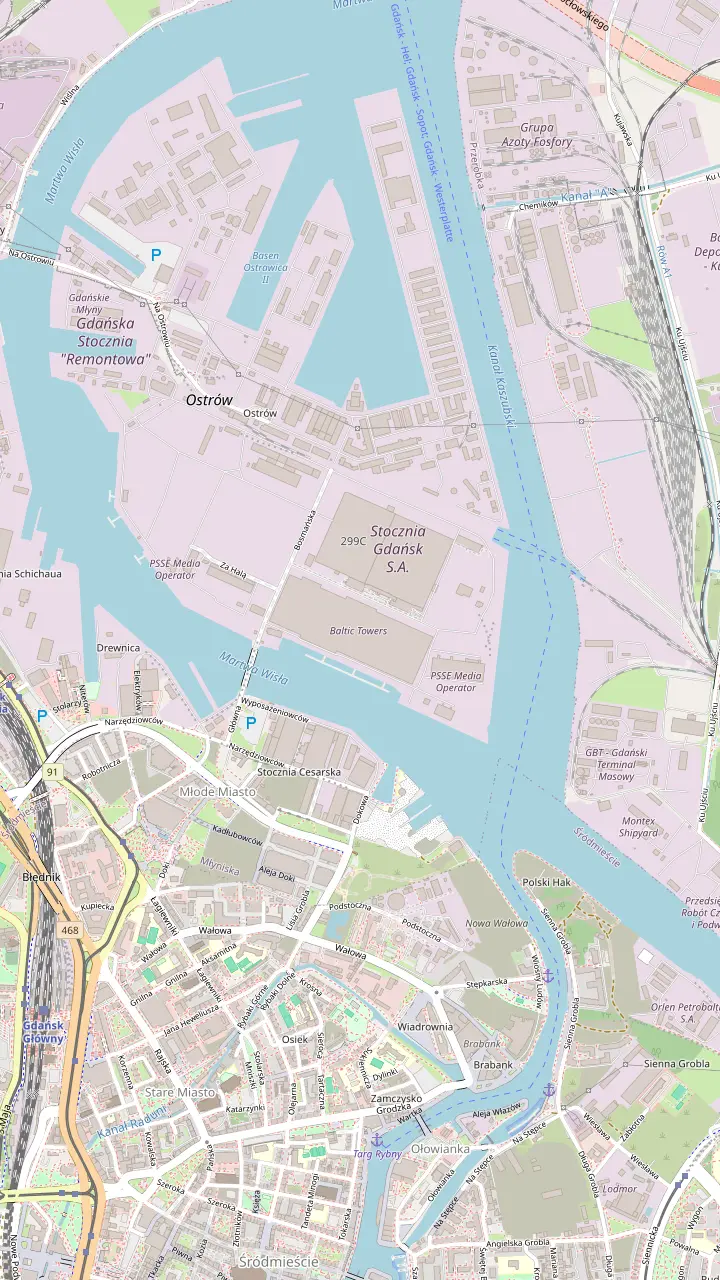
The galar's shipyard start: a marina made in an old shipyard dock.
Google MapsOnce a torpedo store of the Imperial Shipyard; the August 1980 agreement was signed in it.
Google MapsThe shipyard gate with the three 42-metre crosses of the 1970 monument beside it.
Google MapsThe headland named after the Polish raftsmen who brought grain; the harbour waters start here.
Google MapsThe island turned over to building submarines and torpedo boats in 1916, still a working yard.
Google MapsMap © OpenStreetMap contributors
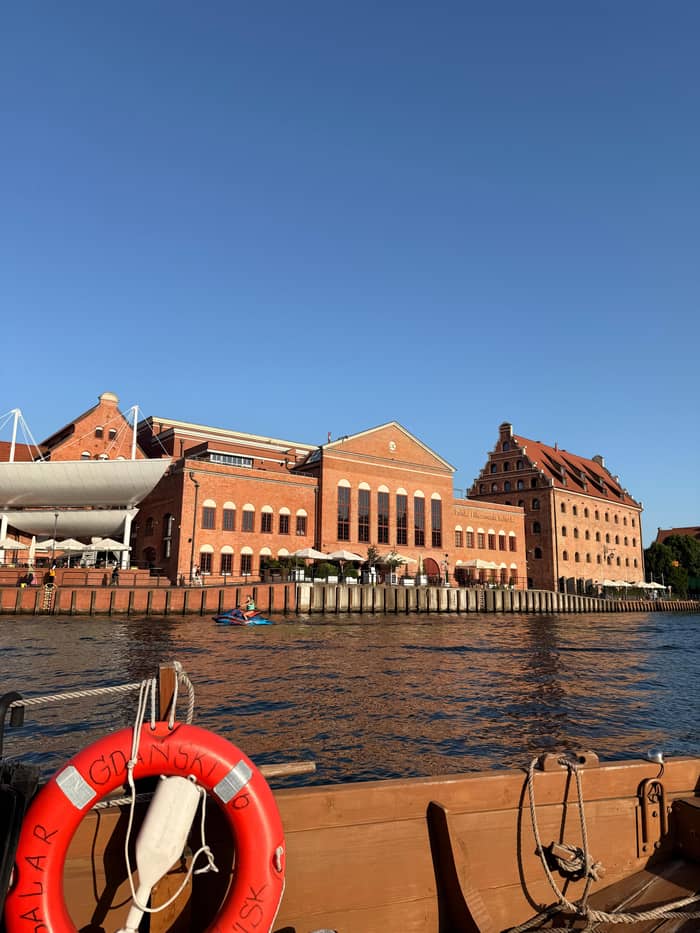
A historical boat tour in Gdansk puts you on a wooden galar, a copy of the river craft that once served the Vistula trade. Here is the boat, the river behind it and the people who sailed it.
Editorial team, gdanskboattour.click · Updated November 9, 2026 · Read in 8 min
Overview
A historical boat tour in Gdansk on the galar is a small affair by design. The boat is a 12-seat wooden replica of a historical Polish river boat, and the cruise lasts 70 minutes. The listing behind the tour says boats of this type were used for over 400 years, mainly in the 18th century. That makes the ride less a sightseeing launch than a moving exhibit: low sides, open seating, and a hull shaped for rivers rather than the sea.
To picture the original, think of what the river demanded. Polish teaching material from the Ministry of Education explains that grain was carried on special flat-bottomed boats able to work shallow rivers, called szkuty, alongside rafts lashed together from logs.4 The National Maritime Museum in Gdansk describes the same world in general terms: farm produce and timber came down the Vistula and its tributaries, goods on purpose-built river vessels and timber as rafts.5 The galar belongs to that family of working craft.
Why bring one back? Because it fits where modern boats cannot. The galar cruise is sold as a way through canals and into corners larger vessels cannot reach. For anyone booking an old boat tour in Gdansk, that is the practical difference: you sit close to the water, you hear the guide without a loudspeaker, and the city is seen at the eye level of the people who once unloaded grain on these quays.
River craft
| Craft | Carried | Source |
|---|---|---|
| Szkuty | Grain on shallow rivers4 | Education ministry |
| Rafts | Wood, goods and people6 | UNESCO |
| River vessels | Farm produce5 | Maritime Museum |
| Galar replica | Up to 12 passengers | Tour listing |
How official sources and the tour listing describe the craft of the Vistula trade.4,6,5
The boat makes sense only with the river behind it. Grain from estates inland was floated down smaller rivers into the Vistula and on to Gdansk, where local merchants bought it and Dutch ships carried it to Holland, France and England.1 A 16th-century account quoted by the education ministry adds the rhythm of that trade: the nobles floated their grain to Gdansk in spring and sold it to the city's merchants.7 Spring water, in other words, set the calendar.
Geography explains the rest. The education platform puts the city's power down to its control of the Vistula mouth, the only route joining the interior to the sea, at a time when grain, a bulk cargo of low value per unit, could be exported only by water.12 Whoever held the river mouth held the bottleneck, and the grain coming down the Vistula passed through Gdansk before it reached a buyer abroad.
Along the way stood a chain of river ports. The same source lists Elblag, Grudziadz, Torun, Bydgoszcz, Wloclawek and Plock among the grain harbours that fed the trade.13 The Vistula panel of the map on this page traces that road from Ulanow and Kazimierz Dolny down past Torun and Tczew to the headland at Polski Hak, which takes its name from the Polish raftsmen who brought the grain.14
Guest scores
Category scores of the 70-minute galar city cruise on GetYourGuide, from 3,498 reviews.
What arrived by galar and szkuta made the city rich. According to the education ministry, the grain trade turned Gdansk into the largest and wealthiest city of the whole Commonwealth.17 In the 16th century its share of Baltic trade reached as much as 30 percent, and by the first half of the next century it had about 40,000 inhabitants.18,19 Gdansk belonged to the Hanseatic League in the years 1361-1669, by the city's own reckoning.20 That membership tied its quays to a trading network around the whole Baltic.
August was the high point. A 16th-century account describes St Dominic's Fair, when more than 400 ships came into the port.21 The grain that had floated down in spring waited in the merchants' granaries for those ships. Granary Island, which your boat circles, is the physical memory of that system, and the Crane on the Long Embankment was the machine that loaded it. From the low deck of a galar the scale of the old quays is easy to read.
The National Maritime Museum has built its Crane exhibition around exactly this moment. Called Gold for Grain, it recalls the age when grain was the base of the Commonwealth's economy and Gdansk, its main port, stood comparison with Europe's largest cities.16 Ship captains paid their dues in a toll chamber, which the museum has rebuilt inside the Crane.22 Seeing the Crane from a galar, then walking through it, is the neatest way to connect the boat with the money it carried.
Pick your galar
Match the boat to what you came to Gdansk for.
If I want the history told well
The daytime galar cruise
Its guide scores 4.8 across 3,498 reviews.
If I want soft evening light
The sunset galar
A 1.5-hour cruise on a historic Polish boat.
If I want food on board
The pierogi cruise
70 minutes on the Motlawa with a pierogi tasting.
If I travel with a wheelchair user
The galar city cruise
Its listing marks it as wheelchair accessible.
If I want the full river story
Add the Vistula River Museum
Boats, tools and models of the river trade in Tczew.15
On a historic boat
Daytime
Shipyard, canals, Old Town
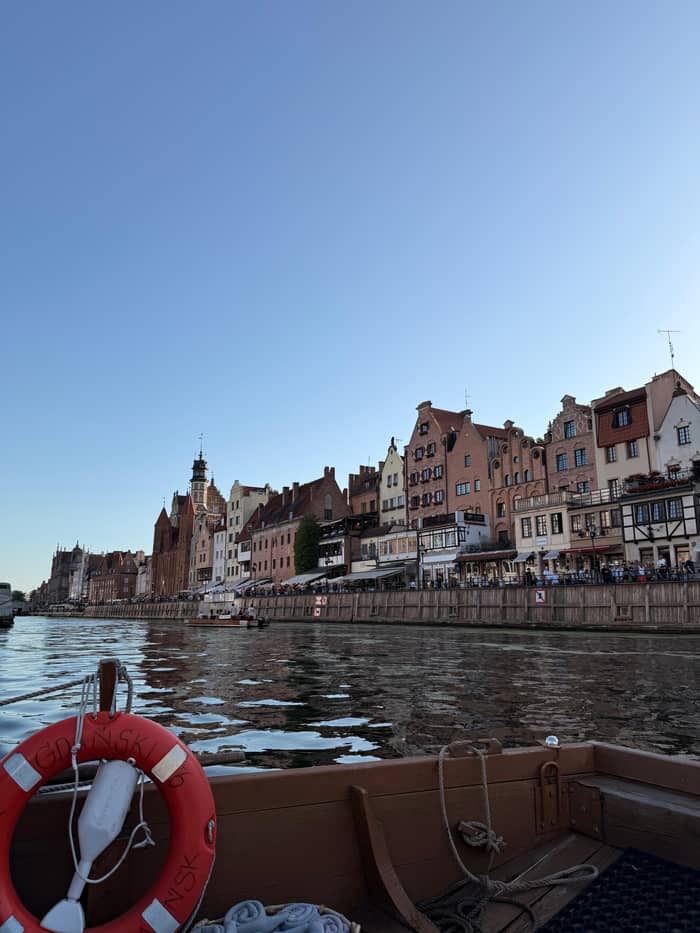
Evening
The same boat, later light
With tasting
From the Imperial Dock
The crews were rafters, flisacy in Polish, and theirs was a hard trade. UNESCO notes that rafters heading for distant ports spent weeks living and working together on their raft.2 Their modern heirs still do: the rafting brotherhood of Ulanow says its longest route runs 700 km to Gdansk, and on it the crew lives on the raft for a whole month.52 Think of that the next time a 70-minute galar ride feels long in a cold wind.
Ulanow, where the Tanew flows into the San, was the undisputed capital of Polish rafting, according to the National Maritime Museum.50 Rafters trained there led floats down the San, Wieprz, Bug, Narew and Vistula to Torun, Grudziadz and Gdansk.48 On the Ulanow run the main cargo was timber, built into long rafts of several strips lashed side by side, with grain a less frequent load.53
The life left a culture behind it. Polish rafting tradition counts its own dialect, its own names for things, its songs and its rituals.51 One of them is the initiation of a new rafter, held on the raft itself and called the chrzest frycowy.54 If your guide does not touch on this side of the story, ask, because the songs and customs are what turned a freight job into a way of life.
Price your galar trip
Pick a cruise and say how many are coming.
Review 3 options
Pick a cruise and say how many are coming.
≈
View≈
View≈
ViewFigures are GetYourGuide from-prices, translated at the ECB reference rate. The booking step shows what you pay exactly.
Rafting through time
Middle Ages
Rafting begins as a way to move wood, goods and people.6
16th century
Nobles float grain to Gdansk in spring to sell.7
1991
The St Barbara brotherhood in Ulanow restarts.8
1993
Rafters cover 724 km from Ulanow in 26 days.9
2014
Rafting is entered on Poland's national list.10
2022
The committee in Rabat approves the joint bid.11
The great grain floats belong to the past, yet the rafting skills never quite died out, and a few river towns kept them alive by practice rather than by museum displays. The St Barbara rafting brotherhood of Ulanow was revived in 1991, and in 1993 it floated from Ulanow to Gdansk, covering 724 km in 26 days.8,9 On those runs the rafters could not bypass Tczew, home of the Vistula River Museum, a branch of the National Maritime Museum in Gdansk.55
Official recognition followed. Rafting was entered on Poland's national list of intangible heritage in 2014.10 On 1 December 2022, meeting in Rabat, the UNESCO committee approved a bid filed together by Poland, Austria, Czechia, Germany, Latvia and Spain, which made rafting Poland's fifth entry on the list.11,56 UNESCO dates the practice to the Middle Ages, when rafts moved wood, goods and people on the current alone.6
The scale is hard to imagine from a 12-seat boat. UNESCO gives modern timber rafts lengths of up to 600 meters, widths of up to 50 meters and a height of up to 2 meters.57 The galar replica is something else: a passenger version of a working river craft, built for city water. It cannot show you a raft, but it does put you in the position the boatmen knew, low on the water and looking up at the warehouses.
Video
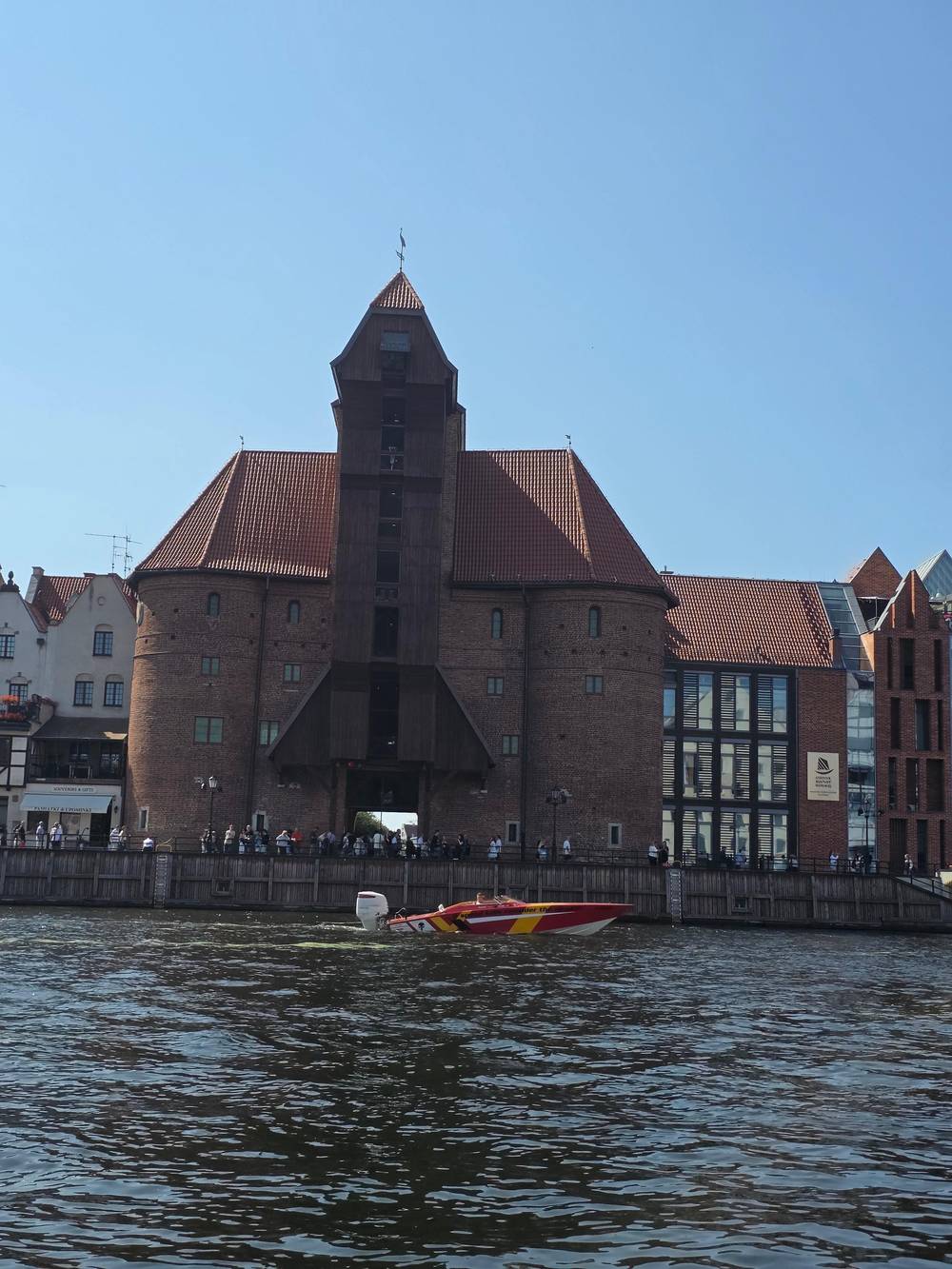
Armchair Travel on YouTube · Nothing is fetched until you hit play.
Trade in grain was the foundation of the economy of the Polish-Lithuanian Commonwealth, and its main port, Gdańsk, rivalled the significance of the largest cities in Europe
Before you board
Think of the trip as a Gdansk guided city cruise on a historical Polish boat, with the guide doing the work a museum label would. The modern galar cruise starts from either of 2 boarding points and ends at either of 2 landing points, set by the ticket you choose, and the former Gdansk Shipyard is among them. A live guide speaks Polish and English, the boat carries a wheelchair-accessible label, and booking works on a reserve-now, pay-later basis with free cancellation until 24 hours ahead. Check the exact meeting point on your ticket, since there are two.
The route names read like a summary of this page: the Old Town reach of the Motlawa, the water gates, the 15th-century wooden crane, Olowianka and Granary Island, then the cranes of the harbour and its inner wharf. The listing also points to the wartime yards that turned out German U-boats. The Motlawa itself is gentle, with so weak a current that kayakers paddle it in both directions.58
Guests rate the experience highly: 3,498 reviews average 4.7, with the guide scored 4.8. For golden-hour light, the same kind of boat sails a sunset version lasting 1.5 hours, from €23. And if you want food with your history, a 70-minute Motlawa cruise from the Imperial Dock marina adds a pierogi tasting, from €37. Compare them in the cards on this page before you choose.
The boat is a starting point, not the whole story, and a day ashore fills in what a guide can only sketch in an hour on the water. The fullest picture of river trade is in Tczew, south of Gdansk, where a 19th-century former factory holds Poland's largest museum of the Vistula's history.59 Its galleries use traditional tools, real boats and ship models to explain boatbuilding and the river trade.15 The permanent exhibition there is free on Saturdays.47
In Gdansk itself, the National Maritime Museum shows its main collection inside three old granaries on Olowianka, which you pass on the cruise.31 Its permanent show is free on Wednesdays.32 Pair it with the Crane's grain-trade exhibition across the river and you have the cargo, the warehouse and the machine that lifted it, all within a short walk of where the galar ties up. A small ferry links the museum's buildings on both banks.60
If your travels take you up the Vistula, look out for the grain stores that fed the boats. The education ministry points to the 16th-century granary of Mikolaj Przybyla at Kazimierz Dolny on the Vistula.49 Standing beside one of those riverside barns, it is easy to picture a season's harvest being loaded for the long float north to the quays you have just seen from the galar, and to see why the craft that carried it were built with flat bottoms for shallow water.4
FAQ
The Gdansk cruise uses a 12-seat wooden replica of a historical Polish river boat type.
The city cruise on the replica galar lasts 70 minutes, with 2 boarding options.
The listing marks it as wheelchair accessible; confirm the boarding details with the operator.
A live guide runs the commentary in both languages.
Timber rafting was inscribed on UNESCO's intangible heritage list in 2022.3
The Tczew branch of the National Maritime Museum shows boats, tools and models of the river trade.15
Sources
Read next
Planning a boat on the Motlawa? Ask a real person here.